


When MC Lars unfurled ‘The Graduate’ on Tuesday, March 21st, 2006, it felt like a rune-inscribed laptop casting a portal where basement shows met browser tabs, letting nerd culture stride onto the mic like a cloak-swirling paladin brimming with rhyme schemes. By threading literature rap references, pop-punk guitars, and catchy video game inspired beats, MC Lars minted a crest for nerdcore hip-hop that told outcasts their quirks were not burdens but spell components. In the social media age of shifting constellations, his DIY distribution and Warped Tour crossings became nerd beacons that successfully bridged skate punk culture, local library supporters, and Comic Convention enthusiasts. Thus, proving that flows could embrace literature and quote Herman Melville. While still gaining independent punk rock and old school hip-hop respect! Please enjoy this Faygoluvers.net celebration of MC Lars’ ‘The Graduate’ LP officially turning 20 this year!
Chad Thomas Carsten: 2004 through 2007, were the years nerdcore hip-hop became destined to make a name for itself amongst the underground thanks to the release of MC FrontaLot’s ‘Nerdcore Rising’ LP, Schaffer the Dark Lord’s ‘Mark of the Beast’ Mega Ran’s ‘The Call’, MC Chris’s ‘Dungeon Master of Ceremonies’ LP, and the MC Lars ‘The Graduate LP”. What makes that era of nerdcore hip-hop so special and respectful during that time?
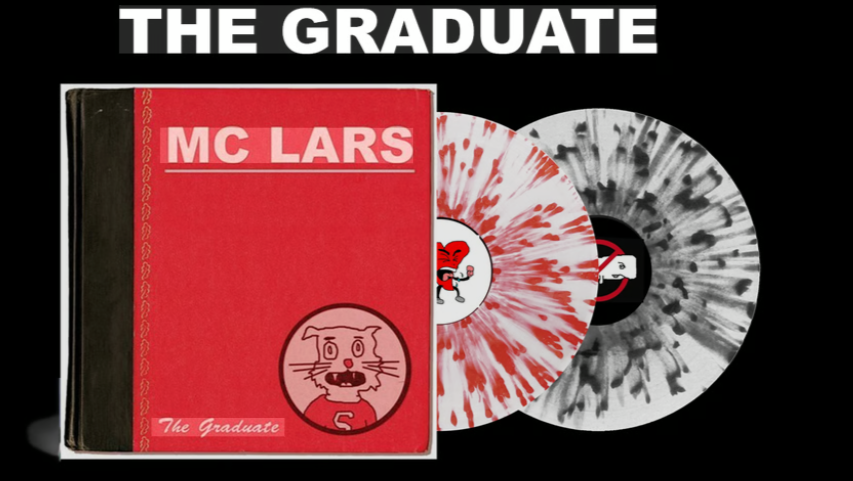
MC Lars: What made that era special was that it still felt genuinely discovered, not packaged.
From 2004 to 2007, nerdcore wasn’t a marketing category yet. It was a loose network of weird, funny, obsessive people building something because they had to, not because anyone thought it would scale. A lot of us were coming from punk, battle rap, comedy, message boards, college radio, DIY touring, and internet subculture at the same time, so the music had different DNA depending on who was making it. That gave the scene range.
It was also respectful because most of the artists you named actually knew their references. It wasn’t cosplay. Frontalot understood computers and rap structure. Schaffer had that dark theater-kid command of character and language. Mega Ran had real heart and discipline. mc chris had an unmistakable voice and knew how to turn fandom into rhythm. I was bringing literature, satire, pop-punk, and early internet anxiety into it. The scene worked because people weren’t faking their obsessions.
Another big part of it was timing. Broadband was spreading, Myspace mattered, message boards still felt intimate, and the old gatekeepers were losing control. That let niche music travel without needing industry permission. Nerdcore could exist nationally before it existed commercially.
And finally, there was still risk in it. Calling yourself a nerd in rap, or putting video games, comics, Tolkien, or Melville into songs, could still get you laughed at. That gave the music some tension. It had to be good enough to justify its own existence. That pressure helped.

MC Lars: Restless.
It’s a record that doesn’t sit still, stylistically or emotionally. I was jumping between satire, literary references, internet culture, punk energy, battle-rap structure, and personal material I didn’t fully understand yet. At twenty-three, I wasn’t interested in making a perfectly unified statement so much as trying to build a world big enough to hold all the contradictions I was living inside.
Listening now, I can hear that the restlessness wasn’t just aesthetic. It was emotional. I was trying to make sense of a world that was changing fast, the internet flattening old gates, subculture getting commodified, identity becoming more performative, adulthood arriving before I was ready for it. A lot of the album is me trying to keep up with all that motion without yet having the language to slow it down. So to a first-time listener coming in from my later work, it might sound more chaotic, more hyper, more eager to prove itself. But that’s part of its character. It’s the sound of a mind moving quickly because it’s excited, scared, overclocked, and trying to turn that into something catchy enough to survive.
MC Lars: I think it’s lasted because it captured a very specific moment honestly, even if I didn’t fully understand what I was capturing at the time.
On the surface, it’s a mid-2000s record about internet culture, punk, rap, college, literature, and all the strange little obsessions that made up my brain then. But underneath that, it’s about something much older and more durable: wanting connection, wanting belonging, wanting to build something that lasts in a world where things disappear quickly. That part doesn’t age out.
The internet was opening everything up, the old music industry was losing control, and a lot of people, myself included, were figuring out who they were inside that collapse. You can hear that energy all over the album. The jokes, the references, the hooks, the satire, they gave people a way in. But I think what made them stay was that the record had real feeling under it. It wasn’t just “look how clever this is.” It was “here’s a room I’m trying to build, come stand in it with me.” Loyal fans still connect with that because they can hear that I meant it.
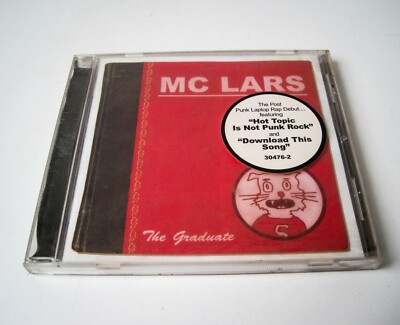
MC Lars: The deepest answer is losing my best friend Jason when I was fourteen. Even though I didn’t name that directly on the album, that loss is under almost everything. When someone you love dies that young, especially in such a sudden and senseless way (killed by a drunk driver on Halloween), it changes your relationship to time, memory, and connection. Looking back, a lot of ‘The Graduate’is me trying to rebuild, through songs, the kind of room Jason and I had made together, a space where humor, weirdness, obsession, and affection could coexist without apology.
Then there was Stanford, which was less important as a credential than as a collision. I had literary training on one side, Pope, Swift, Shakespeare, satire, old books, and then punk, hip-hop, message boards, MP3 culture, Napster’s afterglow, and the intoxicating feeling that the gatekeepers were losing the keys. Oxford mattered too, not because it made me more serious, but because it intensified that feeling that I was stepping into old systems while also trying to break them.
There were also more immediate, smaller life moments in the songs: unrequited feelings in “Rapgirl,” bad roommate anxiety in “The Roommate from Hell,” the internet’s weird early emotional dislocations in “Internet Relationships,” and the whole question of what happens when subculture gets flattened into product in “Hot Topic Is Not Punk Rock.” So the record came out of that whole mix: grief, ambition, humor, insecurity, and a lot of ideas arriving faster than I could sort them.
MC Lars: They each gave me a different piece of the puzzle.
Iggy brought instinct, motion, and danger. “The Passenger” has that hypnotic forward drive where the song feels like it’s moving whether you deserve to keep up with it or not. I loved that. It wasn’t fussy. It didn’t over-explain itself. It had momentum and confidence and a kind of cool detachment that still carried real energy. That sample gave “Download This Song” its spine.
Bowling for Soup, especially Jaret, were influential in a different but equally important way. They showed me that melody, humor, accessibility, and intelligence didn’t have to cancel each other out. You could make something catchy and playful without making it stupid. You could write for real people without flattening your personality. That mattered a lot to me, especially because I was trying to bridge rap, punk, comedy, and literary ideas without sounding like a novelty act. Bowling for Soup also took me on some of my first tours, which mattered beyond the music itself. When you’re a young independent artist, those opportunities become part of your education. They teach you what it means to reach people night after night and not just exist on a hard drive.
MC Lars: Because it was happening in real time and everyone with power seemed to be reacting to it badly.
Labels were suing kids. The RIAA was acting like a wounded empire. Everyone was framing digital culture as collapse, theft, contamination, doom. But if you were actually paying attention to how music was moving, and how people were finding each other online, it was obvious something more interesting was happening. The old model was breaking, yes, but new kinds of access and connection were opening up too.
For me, the internet didn’t just represent a disrupted business model. It felt like a room, disembodied, chaotic, sometimes ugly, but still a room. And I cared about that because I already knew what it meant to lose a real room, to have a place of belonging vanish. So I wanted “Download This Song” to do two things at once: make fun of the panic, and defend the possibility. It had to be catchy enough to spread, because a song about digital freedom that nobody shares is kind of missing its own point. That’s why I went straight at it. It was the central argument of the moment, and I wanted to pick a side.
MC Lars: Yes, both.
The song absolutely has some Aqua Teen in its bloodstream, that tone where absurdity escalates so quickly that the ridiculous starts feeling strangely precise. I liked the idea that evil wouldn’t arrive with gothic grandeur; it would arrive through everyday indignities, a roommate with no boundaries, no shame, no sense of what another person needs in order to function.
But it also came from very real college dread. There’s something uniquely stressful about being thrown into close quarters with someone you didn’t choose and then being expected to call that “community.” That can go great, but it can also become fluorescent tolerance, forced proximity, and low-grade psychic warfare. The song takes that anxiety and pushes it into cartoon territory, but the emotional logic under it is real.
MC Lars: Something like ‘Rick and Morty’ would make a lot of sense to me, because the song lives best in a world that moves fast, stacks references shamelessly, and doesn’t apologize for being both chaotic and specific.
What I like about “Space Game” now is that it’s one of the most unguarded songs on the record. It isn’t trying to prove a theory. It’s just letting my brain operate at full associative speed, sci-fi, Dada, battle rap, lit references, brag-track energy, all of it filed together without any serious attempt to separate it. So I’d want it in something that can keep up with that kind of density and playfulness.
MC Lars: I met Bill through Howie Abrams, who was one of those connective figures at the time who understood how different scenes could actually speak to each other. He had gotten ‘The Laptop’ EP to Jaret and the Bowling for Soup camp, and there was already that bridge in place. I was a real fan of Non-Phixion, Necro, that whole denser overlap of hip-hop and metal and underground East Coast intensity, so working with Bill didn’t feel random. It felt like a genuine meeting point.
We recorded “The Dialogue” at Quad Studios in New York, which already had its own gravity due to 2Pac having been shot there. The thing I still like most about that track is that it wasn’t competitive. It really is a dialogue. Two voices, two sensibilities, not trying to defeat each other so much as map overlap and difference. Bill’s verse feels grounded in lived experience; mine is coming in with questions, structure, and frameworks. That tension is what makes it work. And yes, I’m still a fan. That whole world had real identity to it. It wasn’t interchangeable.
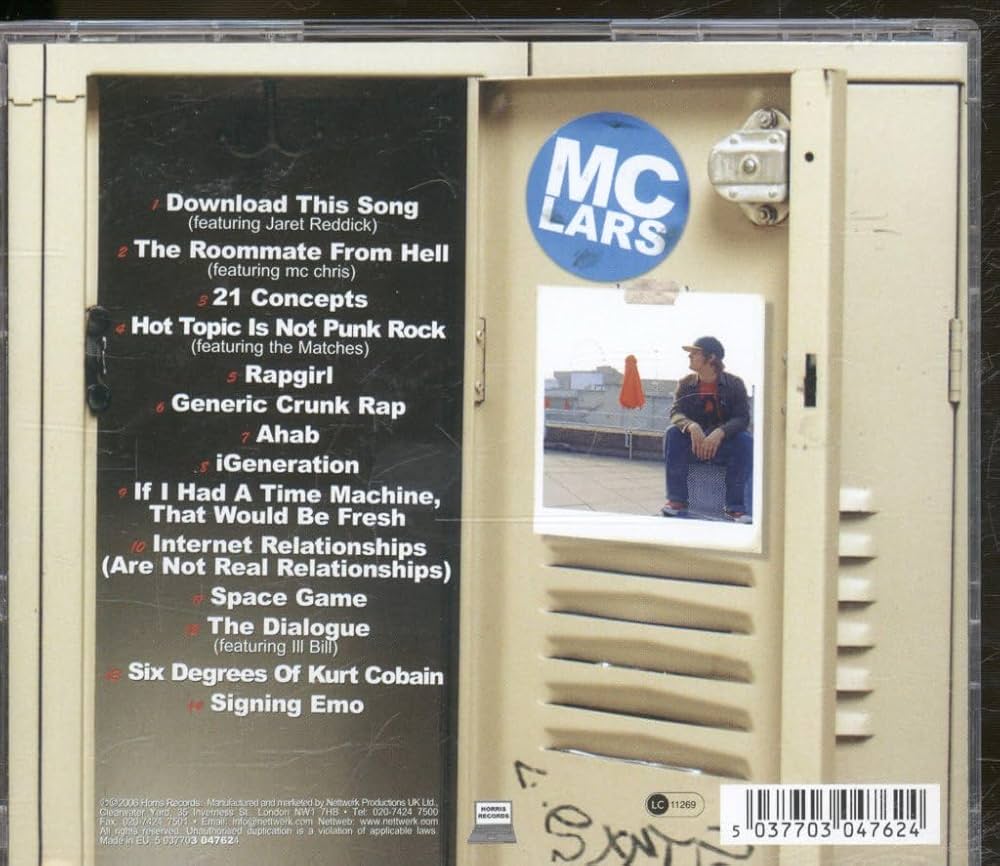
MC Lars: Australia stands out immediately.
After “Download This Song” took off there, especially with the push from Shock Records, I found myself headlining Down Under for years. The success arrived suddenly and with a strange irony, a song about dismantling old systems finding some of its strongest resonance inside one. Touring Australia with the Matches in 2005 also felt huge. We were two acts from a similar NorCal orbit, but from different scenes and expectations, finding common ground on the other side of the world.
CTC: Any advice to other recording artists on becoming a Father/Mother and trying to balance their music career and being a responsible parent?
MC Lars: Be present or it doesn’t work.
Kids don’t care about your rollout, your streams, your tour history, or the fact that someone once reviewed you in a magazine. They care whether you are actually there, and not just physically. That can feel brutal at first if your identity has been built around performance and motion, but it’s clarifying in a good way. It forces honesty. It strips away a lot of vanity and time-wasting.
For me, becoming a father rearranged the hierarchy. My son made fatherhood feel less like solemn duty and more like play restored to dignity. Then my daughter’s early birth and the terror around that made everything even clearer. Suddenly the future wasn’t an abstraction anymore. It was air in her lungs. That kind of experience makes career questions simpler, not easier, but simpler. The work still matters. It just stops being the center of moral reality. Weirdly, that can make the work better.
MC Lars: Bad Religion. They’ve always done something I respect deeply: balancing ideas and melody without sacrificing either. They can be intellectually ambitious without becoming stiff, and emotionally direct without losing precision. That lane, where thought and propulsion actually help each other, is the one I’ve been chasing since the beginning. So if I got to make a record with a classic punk band still active, that would be the dream.
MC Lars: More integration, less compartmentalization.
I’ve already been moving in this direction, but I think the next decade is about bringing together the things that used to look separate in my life: music, teaching, storytelling, curriculum, translation, humor, difficult ideas. I finished a master’s in instructional design, and my thesis circled back to what I’d really been doing all along, literary rap as pedagogy, rhythm as a vehicle for complexity. So I want to keep pushing that.
That doesn’t mean I stop making records. It means the records, the educational work, the live shows, and the writing start feeding one another more consciously. The goal is still the same as it was in the beginning, really: make meaning from chaos, build rooms where difficult ideas can live, and make things people can carry with them.
Interviewer: Chad Thomas Carsten






No comments yet
You must be logged in to post a comment.